
Green Architecture – But at What Cost? How Nature Shapes the Future of Office Spaces in Budapest
In the realm of green architecture, the iconic Bosco Verticale in Milan – a parked high-rise famously known as the “Vertical Forest” – is often cited as a positive example. Its lush greenery and distinctive design make it unique. Yet, while it is undeniably green, it is not necessarily sustainable: maintaining the plants in such conditions is close to torture, and costs are staggering. Residents pay roughly €1,000 per month in service charges – about five times the average – as noted recently in a post by Energiaklub. Some of Bosco Verticale also functions as office space.
This raises important questions: How green is a green building, really? What makes an office building a “living space”? How do green areas contribute to the physical and mental wellbeing of office employees? How sustainable are active and passive green roofs? And how does CPI implement indoor and outdoor solutions to care for their office communities?
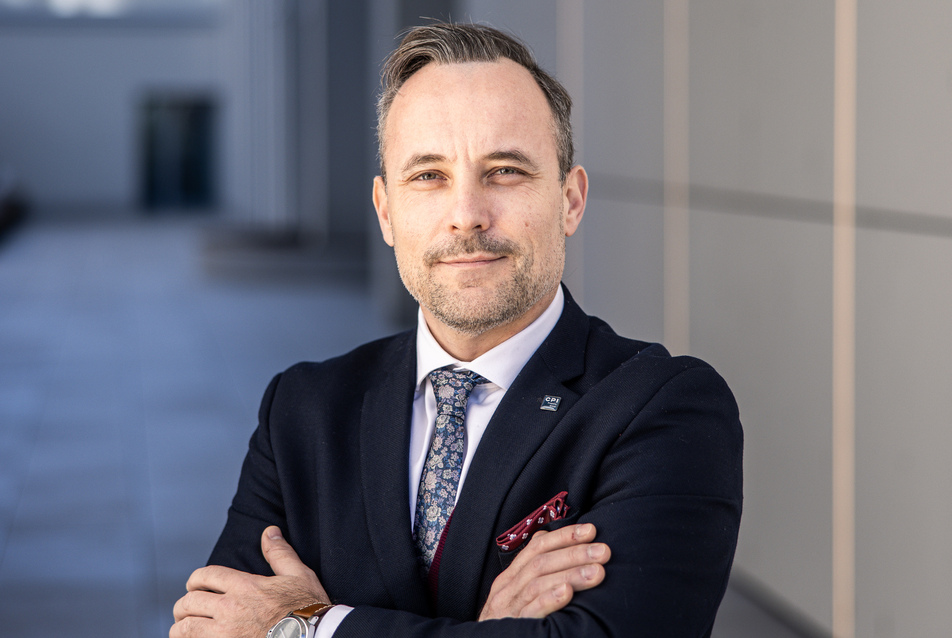
In today’s podcast, editor Péter Sarkadi explores these questions with Henrietta Budai, Sustainability Manager at CPI Hungary and “Net Zero Ambassador.” Budai previously spent seven years managing operations at the Hungarian Green Building Council (HuGBC). CPI Hungary is one of the country’s leading long-term real estate investors, operators, and developers, managing a 603,500 m² portfolio valued at €1.3 billion as part of the CPI Property Group.
Key discussion points include:
Sustainability is often equated with energy efficiency, energy savings, or lower CO₂ emissions. Yet, a truly sustainable approach also encompasses society (people) and economy.
Climate change brings increasingly severe environmental challenges, affecting buildings directly. CPI must identify future technological solutions to address these issues.
Indoor and outdoor measures supporting office workers include active and passive green roofs, green walls, and natural landscaping.
How can office designs promote both employee wellbeing and sustainability simultaneously?
What makes an office a “living space,” and how does this connect to ESG principles?
How can rooftop gardens or indoor green courtyards be both relaxing and sustainable?
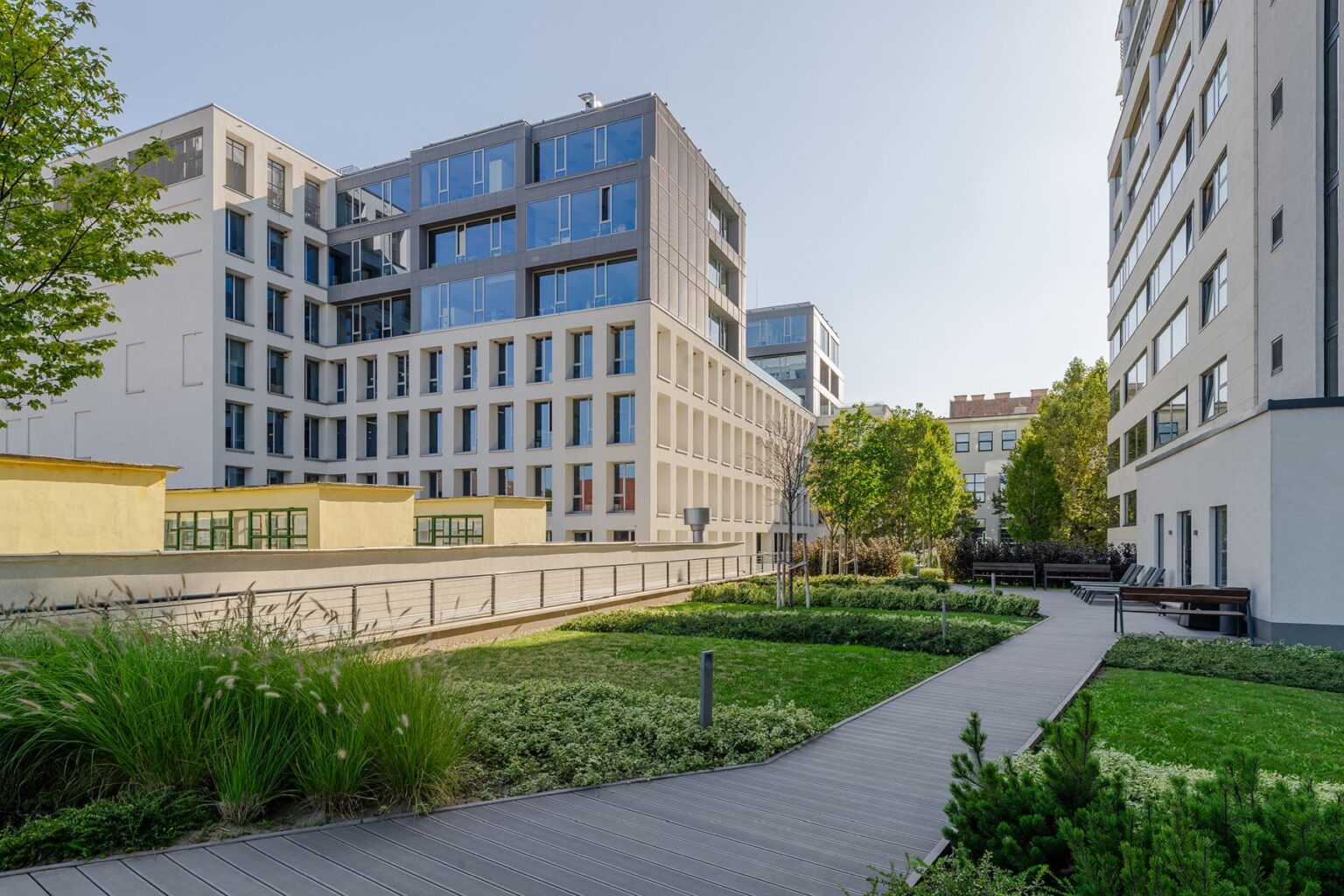
Examples of successful green areas in Budapest offices include Gateway Office Park (Dunavirág Street), Balance Office Park (Váci út), and myhive Haller Gardens.
As cities grow vertically, horizontal connections to nature become increasingly urgent. In urban landscapes dominated by glass and concrete, spaces where nature is an integral part – not a decoration – gain new meaning. Nature is returning to architecture, and the 2025 trends for office green spaces reflect this shift:
Green rooftops, courtyards, and walls enhance urban office environments beyond aesthetics, improving life quality, ecological balance, and community values.
Biophilic design – nature-inspired architecture – has become a standard rather than inspiration. It integrates natural light, organic forms, living materials, and water into the workspace.
ESG requirements are driving real estate developers to implement genuine green solutions that enhance employee wellbeing, not just energy efficiency. CPI Hungary’s portfolio demonstrates this with indoor plant walls, natural materials, and communal green courtyards.
Rooftop Gardens: Views Turn Green
Green roofs have evolved from technical installations to recreational, ecological, and social spaces. Well-designed rooftop gardens mitigate heat islands, improve building performance, and create new habitats for people and wildlife. Myhive Haller Gardens exemplifies modern rooftop garden architecture in Budapest, combining benches, fragrant plants, pollinator zones, and sensory areas.
Vertical Gardens: Walls That Breathe
Living walls are one of the most effective and striking urban greening tools. They save space, insulate, purify air, and can even integrate rainwater recycling. Both indoor and outdoor green walls are increasingly common in offices, serving environmental, branding, and aesthetic purposes.
Foodscaping: Edible Gardens Above the City
Edible landscaping brings nature closer to people. At Balance Office Park, communal herb gardens feature basil, rosemary, thyme, and lemon balm, allowing employees to interact with and care for the plants. This not only fosters community but also raises awareness of sustainable practices.
Smart Water Management: Harvesting the Rain
Intelligent water management is now a necessity. At Balance Office Park, rainwater storage supports sustainable irrigation, maintaining nearly all green spaces efficiently. Future office landscapes embrace greywater reuse, mulching, and stormwater retention.
Trends in Urban Garden Design: 2025 Outlook
No-dig gardens: Soil is not turned, supporting containerized and raised-bed systems.
Wildlife-friendly planting: Pollinator-friendly flowers such as coneflowers, lavender, and ornamental herbs are increasingly included in office green spaces.
Sensory gardens: Fragrant paths, tactile textures, and sound-emitting plants create multi-sensory experiences that reduce stress.
Green Examples from Budapest
Budapest’s newest office buildings lead in integrating nature. Gateway Office Hall’s passageways feature lavender, mixed grasses, and perennial shrubs, creating biodiversity while engaging the senses. Balance Office Park’s sensory gardens and rest areas use stress-relief plants and quiet nooks for relaxation. Rainwater reuse and green energy are standard practice.
Rebuilding the Connection Between People and Nature
Green is no longer a luxury reserved for homes or parks. Green office buildings show that nature adds value not just aesthetically, but socially and mentally. Future green spaces are solutions to urbanization and climate change, creating new opportunities for people to connect with their environment. Sustainability, aesthetics, and community together are shaping the offices of tomorrow – written in green.
.jpg)