
When did you begin the transition toward a more sustainable operating model?
Iván Nagy:
When CPI entered the Hungarian market through the acquisition of several real estate portfolios—approximately ten years ago—this mindset was already present. At the time, we were ahead of the market in this respect, and sustainability has remained on the agenda ever since, taking on an increasingly prominent role in our operations. Gradually, it became embedded in our organizational culture and in the way our colleagues think. Since then, all our developments, refurbishments, and large-scale transformations have been carried out in this spirit.
All our commitments are validated, and within the framework of the Paris Climate Agreement we have also undertaken numerous obligations, which are reviewed and tightened at each climate summit. We have developed an ESG Roadmap that accompanies every single development project. Accordingly, sustainability considerations must be an integral part of every refurbishment and new building project.
So existing office buildings have also been aligned with this approach.
I.N.:
Exactly. It is important to note that this process is ongoing. Around three to five years ago, when the buildings managed by Immofinanz and S Immo were integrated into CPI’s portfolio, our leasable area approached 650,000 square meters. This meant that a significant number of office buildings, shopping centers, and hotels joined the system.
The initial due diligence of these projects was already carried out based on sustainability-focused criteria: what modernization measures or green solutions were already in place, and what was missing for the buildings to truly reflect the company’s environmental ambitions. These sustainability considerations must also be incorporated into our annual budget planning.
Related investments are identified separately—so-called “green capex”—representing expenditures that move a property in a more sustainable direction. Today, lending institutions largely assess developments based on their ESG performance, and this carries increasing weight in scoring systems.
The owner is an absolutely supportive partner in this process and clearly sees that our properties must reflect sustainability principles grounded in a conscious and consistent philosophy.
Are you planning new office developments designed entirely around sustainability principles?
I.N.:
Our New Age office building won the “Concept of the Year” award in 2019. However, the business environment at the time did not allow the project to be realized. We have now renewed the building permit and, in doing so, examined a number of new solutions that can be integrated into the building concept in line with sustainability goals.
Creating such a facility is an extremely complex task. There is increasing discussion about designing buildings that do not merely take from their environment but are largely self-sufficient in terms of energy production. There are still very few buildings of this type, but I am convinced that this is the direction of the future. Our aim is for the building’s CO₂ emissions to be zero or close to zero, and for every feasible sustainability solution to be incorporated in some form.
That said, there is always a financial dimension to these decisions. Investment costs must be weighed against return on investment—after all, a building cannot function without tenants paying rent. It would be misleading to claim that we invest significant sums purely out of idealism. Projects of this scale must be underpinned by solid financial calculations, clearly demonstrating how and over what timeframe the investment will pay off.
Do new tenants specifically look for sustainable solutions when choosing office space? Has this become a baseline expectation?
I.N.:
We see that today—particularly among larger tenants, but increasingly among smaller companies as well—there is a clear expectation that sustainability criteria are examined already during the preselection phase and continuous market monitoring. Tenants look closely at what kind of buildings are being developed, how projects align with the Paris Climate Agreement, ESG objectives, and EU environmental standards, and how these factors correspond with their own corporate sustainability goals.
What expectations do you set for tenants, and how do you motivate them?
I.N.:
Our lease agreements include an ESG appendix, which we refer to as a “Green Lease.” This is essentially a cooperation agreement with tenants, in which we jointly define sustainability goals and commitments for the future.
One of our key objectives is reducing water consumption, which requires accurate measurement. Accordingly, we install separate water meters for each leased unit. The market still typically relies on area-based cost allocation rather than actual consumption, but we aim to change this practice in the near future.
At portfolio level, we strive to reduce overall consumption, but this cannot be achieved by the landlord alone—tenant cooperation is essential. We therefore work together to promote conscious water use and reduce ecological footprint.
Another major focus area is energy consumption. We aim to reduce usage and encourage more conscious energy behavior, supported by educational programs and regular forums where tenants can exchange experiences and provide feedback on building operations. Tenants can also propose measures to improve their own operations or the building’s sustainability performance. These proposals are always reviewed, and if they show real potential, we explore how they can be implemented in practice.
What other tools or solutions support environmentally driven rethinking of buildings—for example, in heating systems?
I.N.:
In many of our buildings, we are currently transitioning from boiler-based heating to heat pump systems powered by renewable energy. Each project is approached individually, taking into account the building’s age, original technical design, and mechanical systems.
Heat pump systems fundamentally avoid fossil fuels. The remaining question is the source of electricity—which is why we hold portfolio-wide certification confirming that we purchase green electricity for our buildings.
We also operate a dedicated energy department that analyzes building operations in detail, such as monitoring HVAC start-up and shutdown times to avoid overlapping energy peaks and ensure balanced consumption.
Energy capacity shortages pose a serious challenge, particularly in Budapest, where grid capacity and transformer availability are limited. Heat pump systems require significantly more electricity than gas-based solutions, which the current grid can only partially support. This makes infrastructure development essential, but also places responsibility on developers to optimize energy use and avoid overloading the network.
Nighttime electricity is considerably cheaper, making energy storage and later daytime use an effective strategy. Phase-change systems, for example, allow cooling energy to be stored at night and utilized during the day. One of our new buildings is already considering such a solution, enabling near-zero use of “fresh” energy.
In addition, photovoltaic systems have been installed at several of our retail parks, including Campona Shopping Center and two CityMarket locations. While these systems cannot cover full energy demand, they significantly reduce consumption and enable partial self-generation.
We expect that within one to two years we will have precise, measurable results showing the extent of reduction achieved. In terms of water use, we have set an ambitious target of more than a 10% reduction, which is substantial for a portfolio of this size.
Beyond interiors, your projects also emphasize green outdoor environments, such as at Balance and Gateway Office Park.
I.N.:
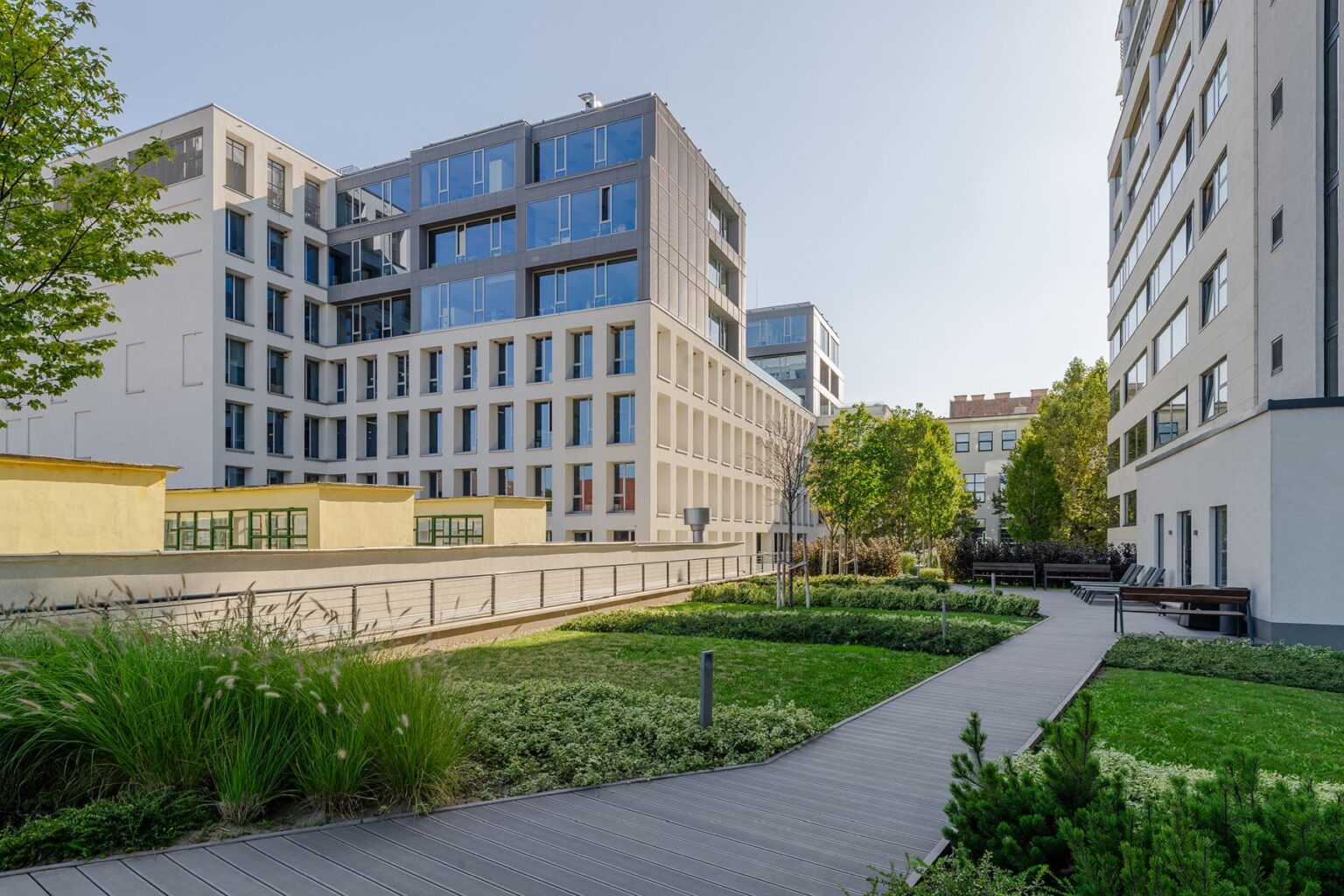
These projects represented our first practical steps in ESG-driven development strategy. At both sites, the conscious design of external green spaces played a key role. Balance Office Park, in particular, functions as a true “urban oasis,” with interconnected outdoor areas forming a self-sustaining micro-ecological system.
These environments offer aesthetic value, mitigate the urban heat island effect, and create a more pleasant working atmosphere. Rainwater and groundwater reuse is central at Balance Office Park, supported by drought-resistant, low-water-demand plant species and permeable paving systems that allow water infiltration and storage.
Irrigation is water-efficient, relying on collected rainwater stored in infiltration layers and tanks. Green roofs—and in the future, green façades—also contribute to improving urban microclimate.
In terms of workplace well-being, what services do you provide for tenants?
I.N.:
The pandemic accelerated the shift toward home office, but we believe the home is primarily a place for rest, not work. We aim to make the office the primary workplace again by providing not only a functional environment but also services that support well-being and work–life balance.
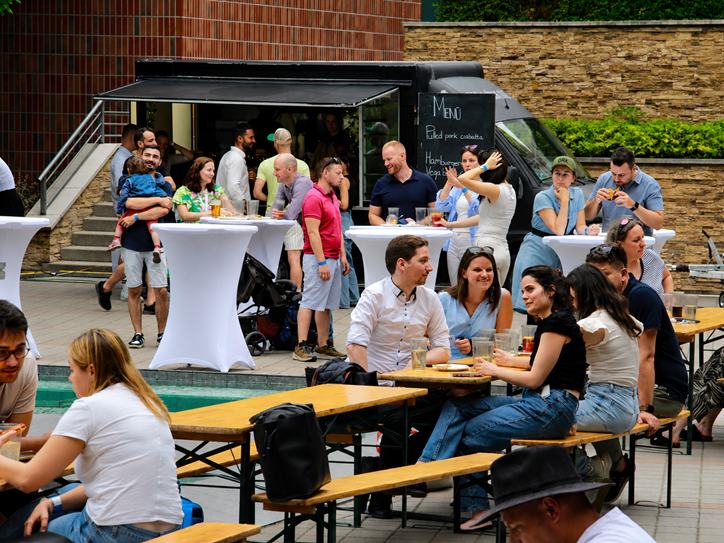
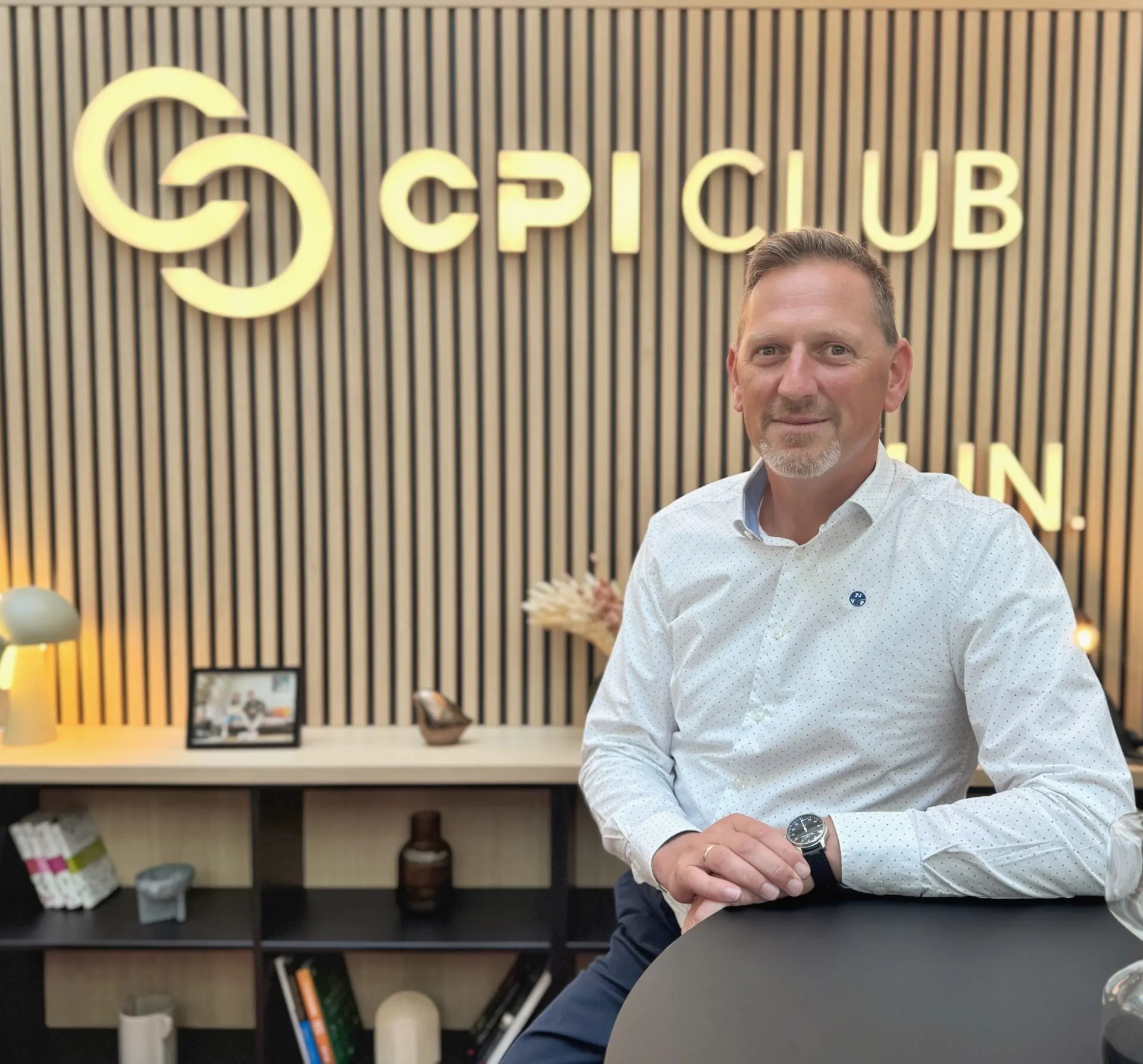
Our myhive buildings offer serviced office solutions and hospitality-inspired concepts that make offices more livable and welcoming. Over the past two years, we have further developed these ideas into the CPI Club tenant benefits program, offering wellness, sports, community events, and even on-site farmers’ markets.
We see ourselves not merely as office space providers but as comprehensive service partners. This approach strongly aligns with the social pillar of ESG, as human well-being is a core value for us.
Reducing carbon footprint is a long-term goal for CPI Hungary. What developments lie ahead?
I.N.:
One area where we want to play an active role—especially in large-scale developments—is the creation of energy communities. These are closed, local systems where energy is produced and consumed within the community.
Residential, office, and social buildings can all participate. During the day, unused residential energy can be utilized by offices; in the evening, the flow reverses. This flexible model allows energy to be redistributed across time and space. Scandinavia already offers several successful examples.
Energy communities are particularly relevant for mixed-use developments connected to social or educational institutions. Any developer can join such systems, sharing and later reclaiming energy as needed. This is clearly a direction future Hungarian developments should move toward.
.jpg)